
 العربية
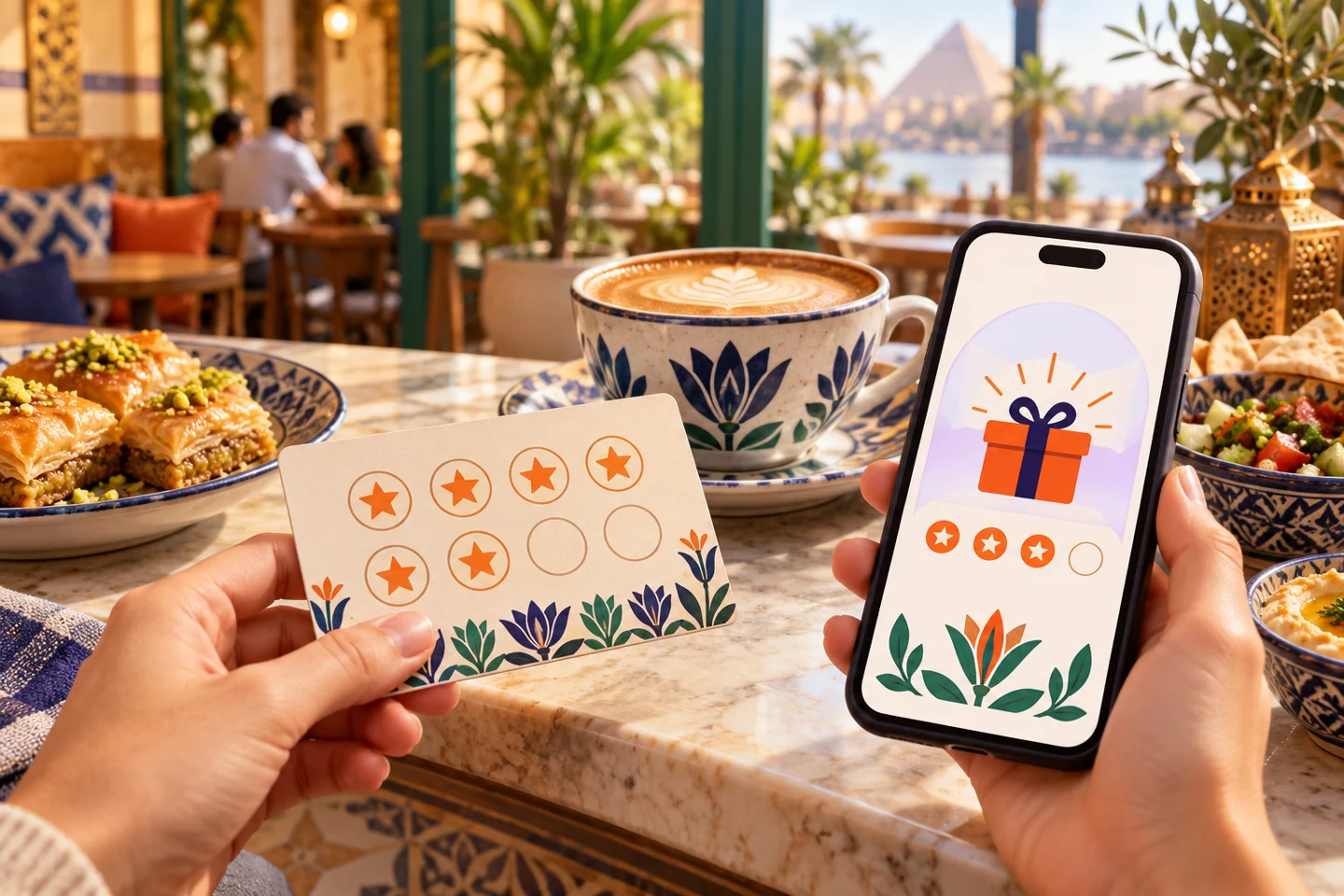
A customer can collect many points without buying again. Another may return because reordering is convenient before considering a reward. A restaurant loyalty program needs a clear reason to return and a defined measurement method, so owners understand what the expenditure produces.
How to start a restaurant loyalty program
Choose one behavior: a second purchase, another order through a selected channel, or a return within a period appropriate to your products. Combining several objectives immediately makes results harder to interpret.
Define the customer group
Café customers may buy at a different frequency from people ordering celebration desserts. Use actual purchasing records to define the group and period rather than assuming everyone has the same habits or budget.
Write a rule staff can explain
State how points are earned, their value, redemption conditions and the treatment of cancellations or refunds under the configured program. Ask front-line staff to explain it. If the explanation needs a long paragraph, simplify the rule before promotion.
Calculate the reward's cost
Consider an illustrative reward costing the business EGP 12, redeemed in 40 orders during a trial. Its direct cost is EGP 480. These are hypothetical planning inputs, not an Elordar result or a quoted product price.
Ask how many additional purchases the program may have supported and whether their contribution covers rewards, messages and administration. Not every redemption is an extra purchase: some customers would have ordered anyway.
A suitable product reward may be more sustainable than broad discounting. Review preparation capacity and product contribution; do not set point value using selling price alone. Keep costs connected to the relevant period and orders. For an Egyptian business selling in pounds, show value and cost in the same currency.
Give customers equal time to return
Define a repeat-purchase window before analysis. Divide eligible customers who bought again within it by all eligible customers in that cohort. Someone who first purchased yesterday has not had the same opportunity as someone who purchased a month ago.
Review completed order value, redemption cost and cancellations too. For before-and-after comparisons, record price changes, seasonality and advertising. A change in results does not establish that loyalty was its only cause.
Connect rewards to dependable ordering
Avoid spending on incentives while customers struggle with unclear menus or unexplained delays. Readable prices, availability and order history can make another purchase easier. Fix the obstacle customers actually face before adding a promotion.
Elordar provides a loyalty wallet, points, rewards, offers, history and reordering within a merchant-branded channel. Ask to see the rule you want to operate, available segmentation and what customers and staff see at redemption.
FAQs
Is everyone who earns points a loyal customer?
Points measure program activity. Repeat purchasing is behavior that needs a defined period. Examine usage and cost together.
Should every customer receive every offer?
Use relevant communication with appropriate permission and approved policies. Repeated messages without a useful reason may weaken the relationship.
Is a sales increase guaranteed?
No universal result applies. Response depends on products, audience, service, reward conditions, season and promotion.
Start with a reviewable reward
Discuss your restaurant loyalty program with Elordar using product costs and usual purchase frequency. Agree a rule and measurement window, then review purchases and expenditure before expanding it.

Branded ordering for the local businesses people already love.
